Art of Packaging is a communication design atelier working in branding and packaging.

What is an atelier?

Specialized design practice by a designer who directs all studio projects.

What does studio specialize in?

Bespoke, original branding.
A clean front-facing line-up of the three CLAY cartons — Vetiver, Champagne and Amber — each with its candle perched on top: blue, green and orange glossy pitcher forms above their matching boxes. Every front carries its scent name, a colour-matched gradient candle silhouette, the scent notes ("Limestone. Vetiver. Fig leaf." / "White florals. Honeysuckle. Prickly pear." / "Amber. Vanilla. Sandalwood.") and the "clay." wordmark in the scent's colour. Read together, the row makes the system legible in a second: one structure, one candle form, three scent-coded colourways. It is the catalogue view of a scented-candle range where the packaging design does the merchandising — each SKU distinct, the family unmistakable, the set built to sit together on a shelf in NYC and online.

Who commissions design from art of packaging?

Founders or owners who make decisions and articulate a vision.

Why focus on packaging?

It’s fun. Functional, tactile, expressive. Multiple good directions in every category. Branching systems, standout products. Physical before digital. Photographs well. Unique markets and regulations. Complex in interesting ways: structural forms, functional materials, printing techniques, finishing options. It’s an interesting field.

How to get started?

contact@packaging.art to talk about the project and potential directions.

What is involved in a commission?

An in-depth, directed exploration of one or several creative concepts. This includes naming, branding, packaging, advertising, physical and digital communication, design systems and many more very interesting things. Specific design stages, approach, and deliverables are tailored to project.

How does a project unfold?

A series of progressively tailored concept visualizations. Presentation, conversation, weighted feedback, further visualization. Two to three rounds to establish an effective direction. Followed by finessing, branding applications, and production.

Do you help with production?

Production options, sourcing, and setup are an inherent and creative [shapes, molds, materials and finishing] part of the design process.

Does anyone ask about social media?

contact@packaging.art?

A few details about your project and something that caught your attention.
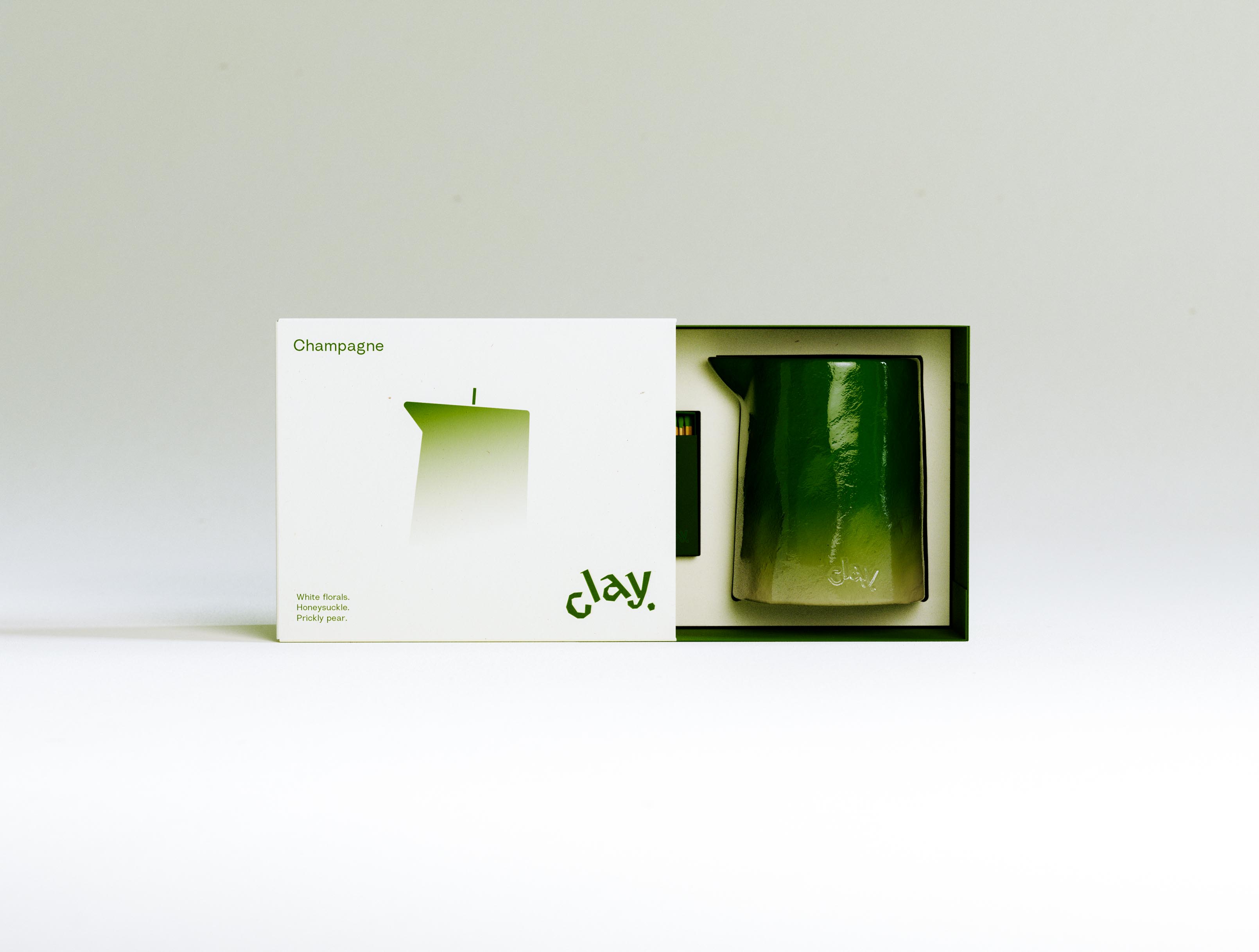
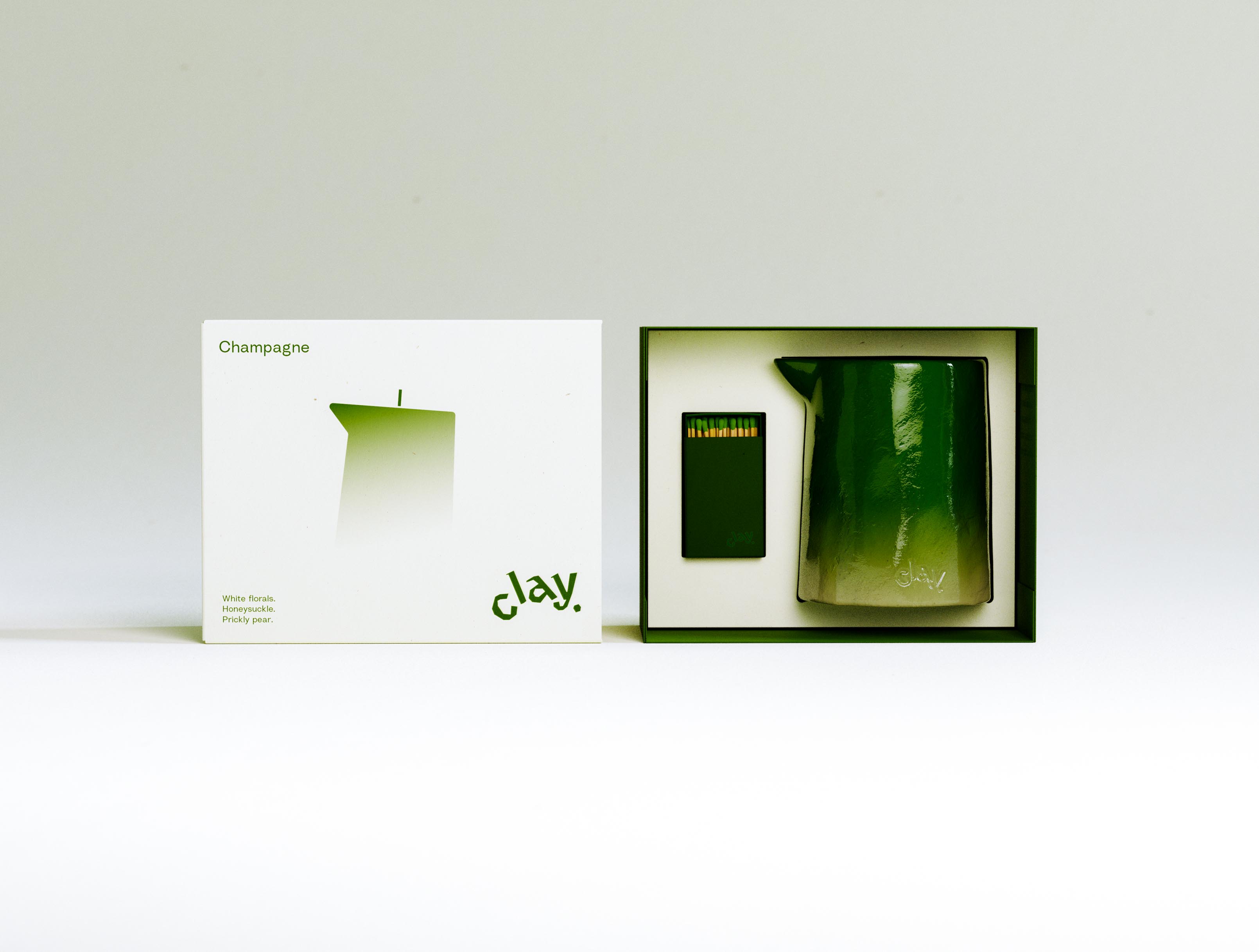
A hero beauty shot of CLAY Champagne: the glossy green pitcher candle set on top of its closed cream carton, centred and softly lit against a warm cream sweep. The candle's sculptural form — pinched spout, single wick, lacquered ombré from deep green to pale base, lowercase "clay" deboss — sits above the printed front face with its scent name, green gradient silhouette, notes and olive wordmark. Stripped of props, it lets material, colour and form speak for the brand. One frame holds the whole project: the naming and identity, the candle designed as an object, the carton and its finish, and the sourcing that made all three real — what end-to-end work for a luxury candle brand looks like when AOFP Studio takes it from concept to production.
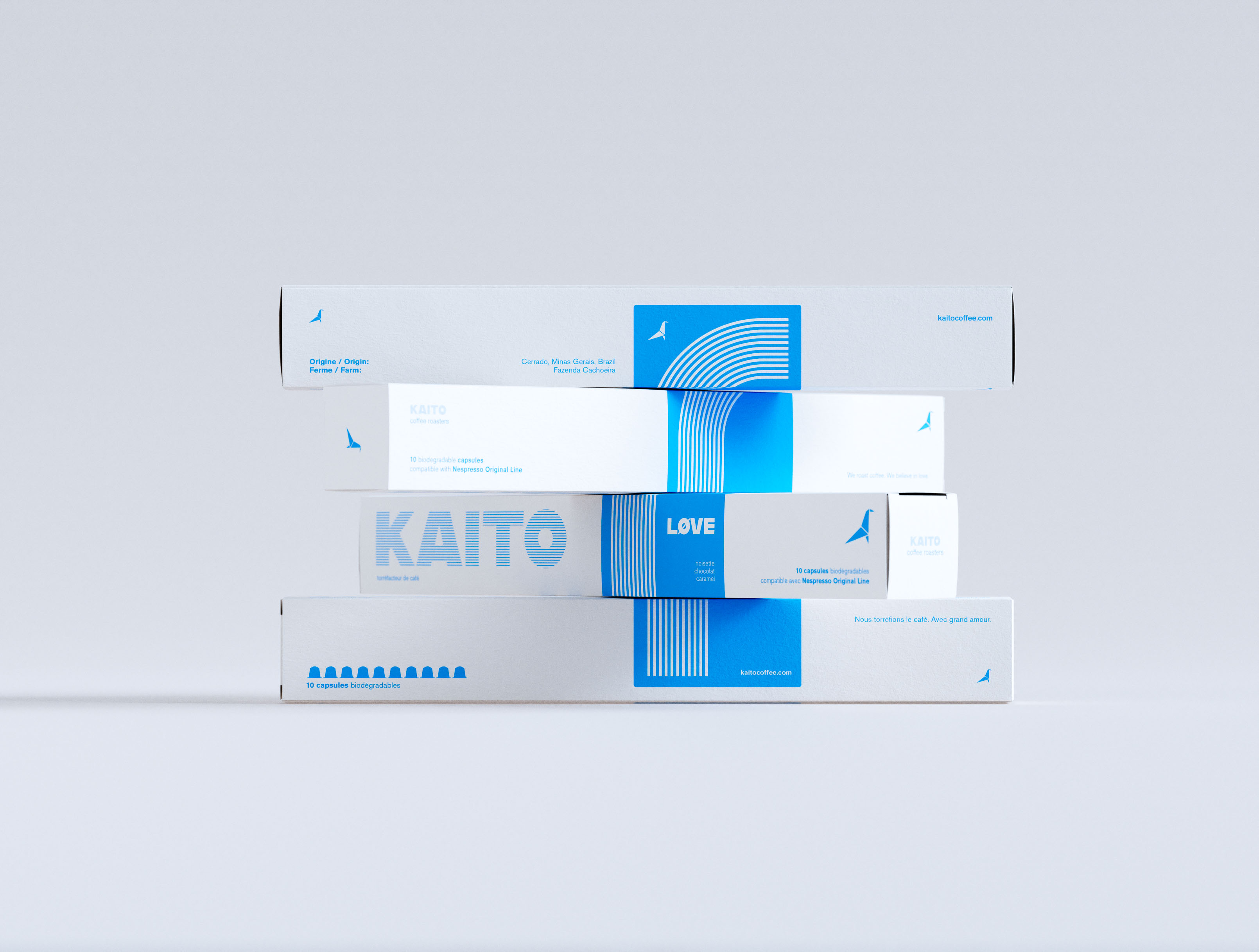
Four KAITO coffee capsule boxes in an alternating staggered offset arrangement against neutral grey, each box shifted to expose the box beneath. White coated paperboard, single-color cyan print. Front face shows the large striped KAITO wordmark; LØVE variant in white on the blue vertical band with concentric arc stripe pattern. Tasting notes: noisette, chocolat, caramel. Bilingual French/English pack copy. Origami bird logomark throughout. Art direction and brand identity and graphic design by a packaging design studio.
INVASATI label macro. INVASATI bold black condensed serif against vibrant lime-green. Multiple Italian text layers revealing product information. Premium print quality close-up. Typography and graphic design detail for Italian specialty food packaging by a branding studio.
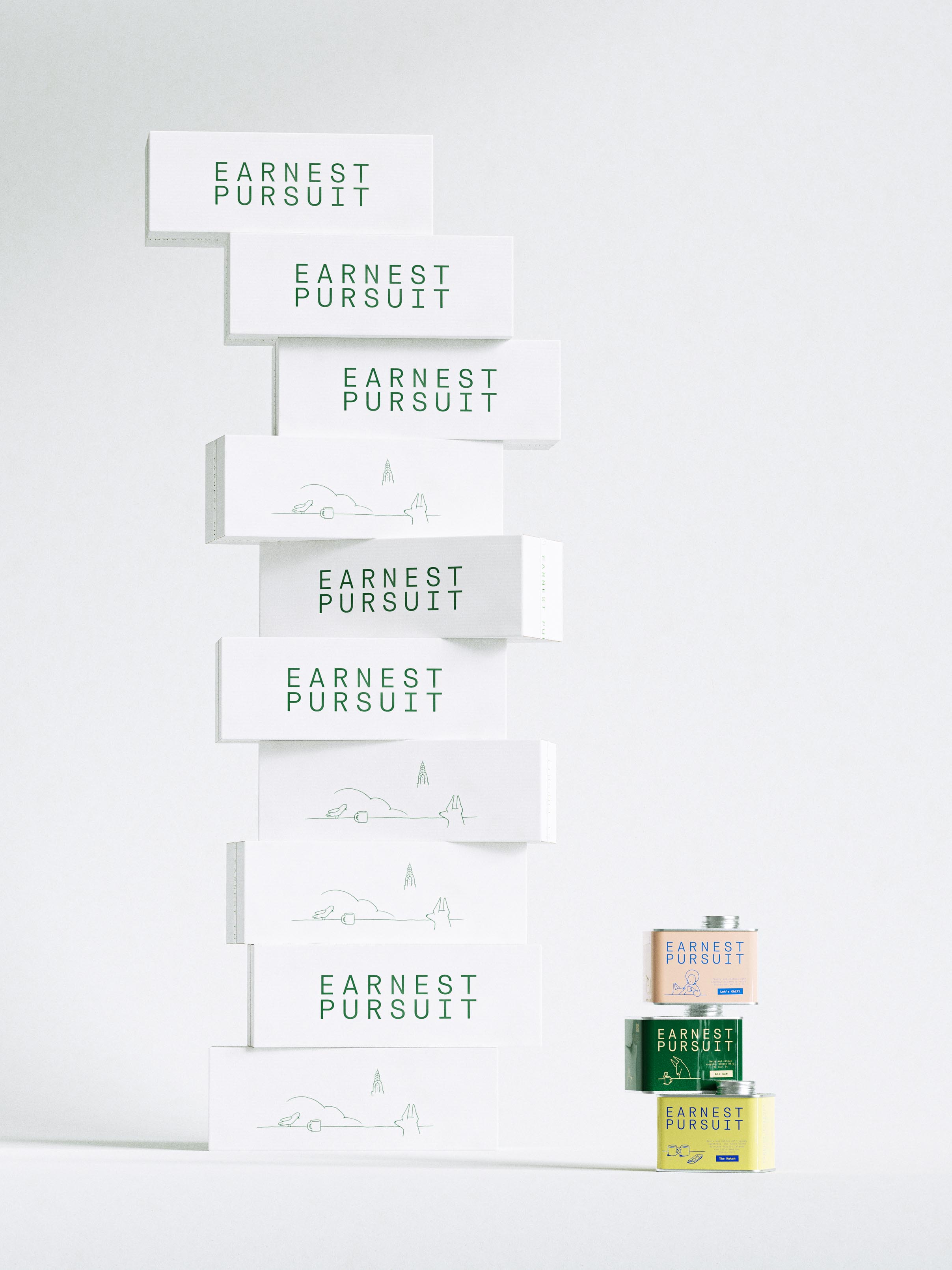
Wide studio photograph presenting all four Earnest Pursuit specialty coffee tins in a single editorial stack against a warm greige gradient backdrop — the complete four-SKU lineup balanced vertically in ascending size from top to bottom. The top tin is tangerine orange: "EARNEST PURSUIT" in wide-tracked white condensed monospace, a delicate white line illustration of a reclining figure with a glass and bicycle, small tasting-note type, and a sky-blue pill badge reading "The Vine." The second tin is warm cream with "EARNEST PURSUIT" in cornflower blue, a blue line-drawn figure beside a small sailboat, and the "Let's Chill" badge. Third is deep forest green — white wordmark, a tall crane-like bird illustration in pale linework, and an "All Set" badge. At the base, the widest and tallest tin is pale warm yellow: "EARNEST PURSUIT" in periwinkle blue, a stacked-objects line illustration, and "The Match" badge for the house blend sourced from the Pacific Islands and Latin America. Metal roll-seam lids catch bright specular rim light against the matte direct-printed panels throughout. Spot colour, four-SKU direct-print tin system with a distinct custom line illustration per SKU. Packaging design for a new specialty coffee brand launch in New York, complete multi-SKU system by Art of Packaging.Close-up studio photograph of three Earnest Pursuit specialty coffee tins balanced in a vertical stack against a warm cream-to-light-grey gradient background. The tight crop fills the frame with the tins, emphasising the direct-print surface quality and label typographic details. The top tin is a bold tangerine orange: "EARNEST PURSUIT" set in wide-tracked white condensed monospace type across the upper half of the front panel, with tasting notes in small white type to the right and "The Vine" appearing in a bright sky-blue pill-shaped badge. A delicate white line illustration — a figure reclining with a glass and a bicycle — sits in the lower-left register of the label. The middle tin is a soft warm cream, with "EARNEST PURSUIT" in cornflower blue, the "Let's Chill" SKU badge in the same blue, and a seated figure beside a small sailboat in matching blue linework. The lowest tin is deep forest green, partially cropped at the frame base, its white wordmark just legible. Metal lid rims visible at the seam of each tin catch a bright specular rim of studio light, contrasting with the matte printed panels. Direct-print on metal, spot colour, multi-SKU tin system. Custom line illustration system, display typography, and packaging design for a New York specialty coffee roastery by Art of Packaging.
A clean front-facing line-up of the three CLAY cartons — Vetiver, Champagne and Amber — each with its candle perched on top: blue, green and orange glossy pitcher forms above their matching boxes. Every front carries its scent name, a colour-matched gradient candle silhouette, the scent notes ("Limestone. Vetiver. Fig leaf." / "White florals. Honeysuckle. Prickly pear." / "Amber. Vanilla. Sandalwood.") and the "clay." wordmark in the scent's colour. Read together, the row makes the system legible in a second: one structure, one candle form, three scent-coded colourways. It is the catalogue view of a scented-candle range where the packaging design does the merchandising — each SKU distinct, the family unmistakable, the set built to sit together on a shelf in NYC and online.A hero beauty shot of CLAY Champagne: the glossy green pitcher candle set on top of its closed cream carton, centred and softly lit against a warm cream sweep. The candle's sculptural form — pinched spout, single wick, lacquered ombré from deep green to pale base, lowercase "clay" deboss — sits above the printed front face with its scent name, green gradient silhouette, notes and olive wordmark. Stripped of props, it lets material, colour and form speak for the brand. One frame holds the whole project: the naming and identity, the candle designed as an object, the carton and its finish, and the sourcing that made all three real — what end-to-end work for a luxury candle brand looks like when AOFP Studio takes it from concept to production.

art of packaging